 admin
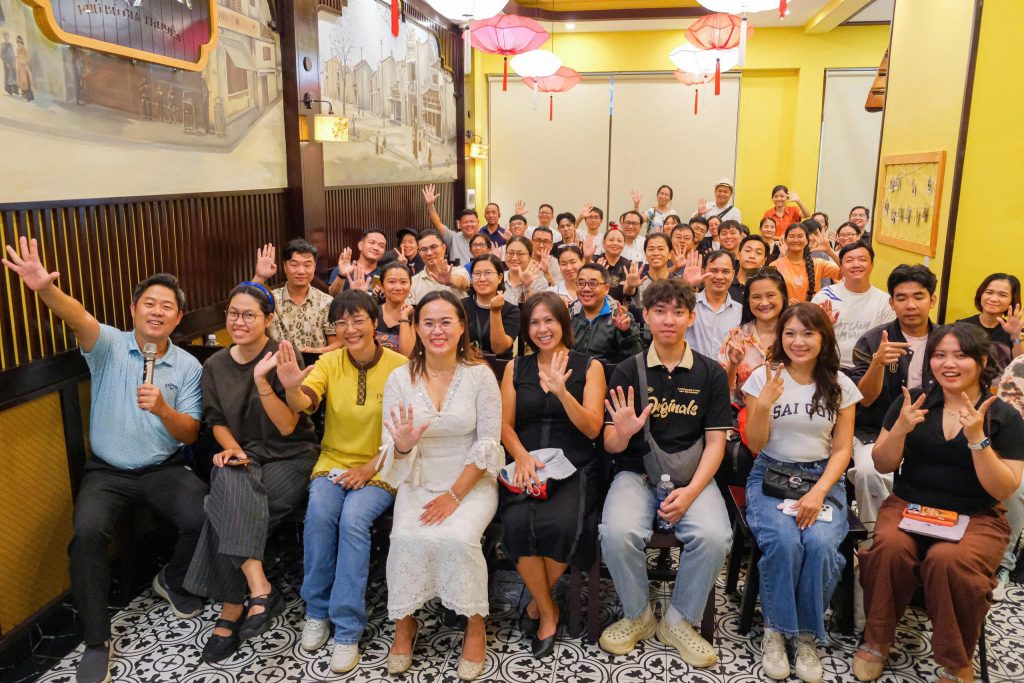
Around 120 tour guides in Ho Chi Minh City took part in storytelling workshops, exploring the rich history, cultural heritage and stories behind Phở, Vietnam’s iconic noodle soup.
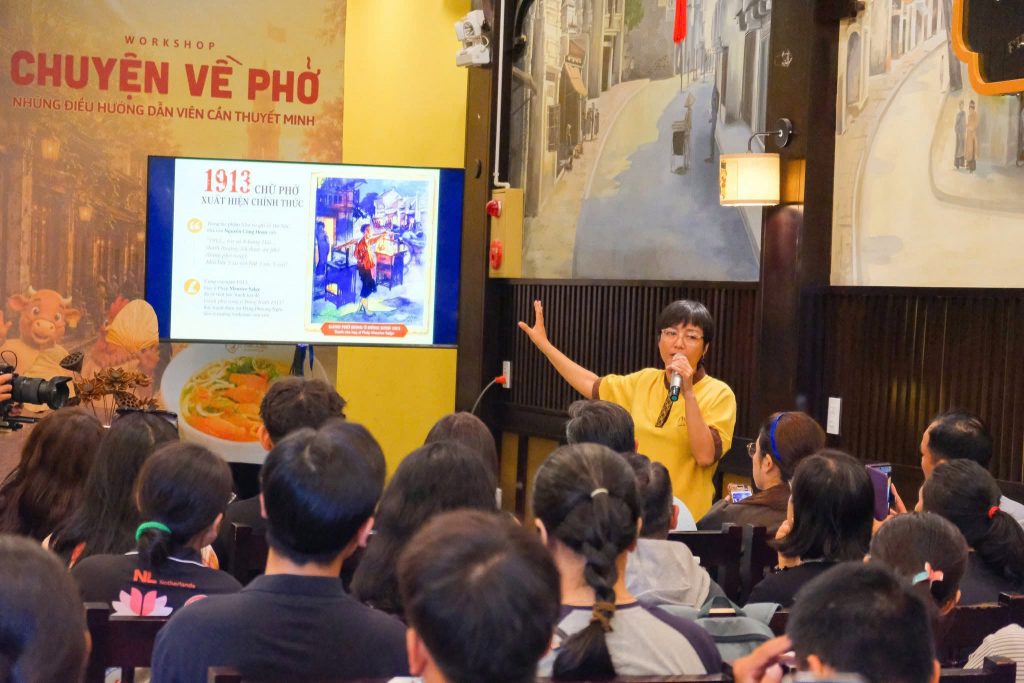
Phở is among Vietnam’s most internationally recognised dishes. But what happens when a foreign visitor asks when phở first appeared, why there are both beef and chicken versions, or what distinguishes Hanoi-style phở from its Saigon counterpart? Can a tour guide tell a compelling story that goes beyond ingredients and the way the dish is served?
These questions inspired “Stories of Phở – What Tour Guides Should Know and Share”, a program jointly organised by the Alliance of Tour Guide Clubs and the Tài Lộc Phở System in Ho Chi Minh City. The speaker was Giang Vu, a former journalist who has spent many years researching and writing about Vietnamese food culture.
One bowl of phở, many stories from the past
Rather than beginning with recommendations on where to find the best phở, Giang Vu took participants back to early 20th-century Hanoi, when itinerant phở vendors were a familiar sight on the city’s streets and the dish was gradually becoming part of everyday urban life.
The origins of phở remain a subject of debate. Some theories link it to the French pot-au-feu, while others point to the Chinese beef noodle dish niu rou fen. Other studies emphasise the creativity of Vietnamese cooks, particularly phở makers from Nam Dinh Province in the northern Vietnam, who played an important role in shaping the dish.
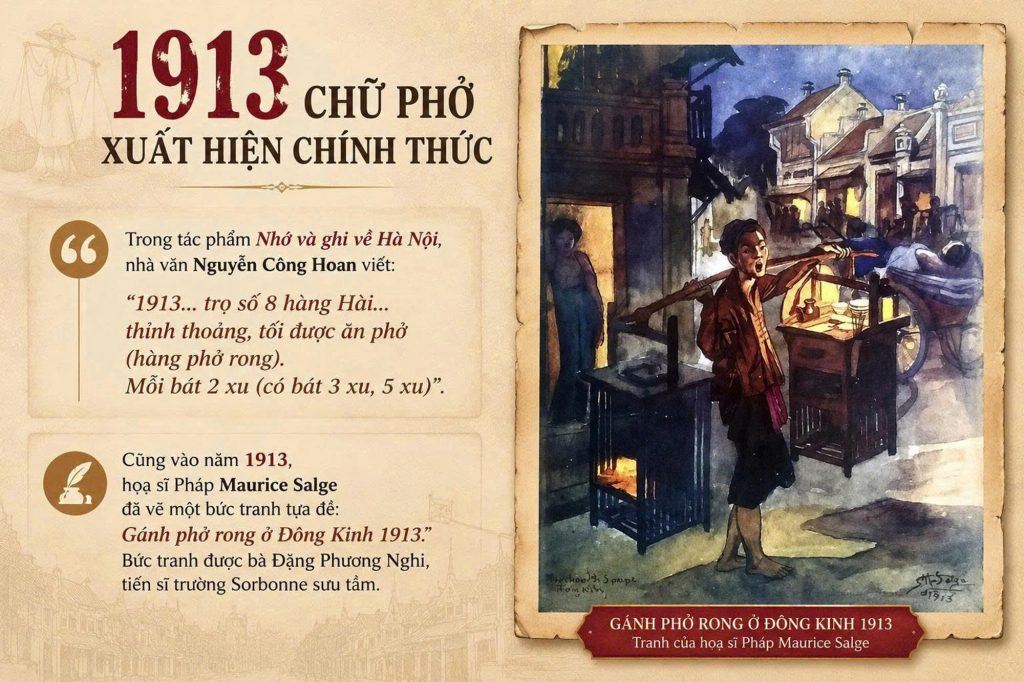
Instead of seeking a single definitive answer, the discussion drew on historical documents, literature and paintings. From references to phở dating back to 1913 and a painting of a street-side phở vendor by French artist Maurice Salge, to its inclusion in the 1930 Việt Nam Tự Điển (Vietnamese Dictionary), participants were able to trace the dish’s gradual emergence in Vietnamese society.
The writings of Thach Lam and Vu Bang offered further glimpses into Hanoi’s culinary life, when a bowl of phở was more than a simple breakfast. It was also a pleasure to be savoured.
In 2007, the word “phở” was included in the Shorter Oxford English Dictionary. From its humble beginnings as street food, phở had travelled a remarkable distance to become a familiar name among diners around the world.
Northern and Southern phở: A meeting of culinary cultures
One topic that particularly interested the tour guides was the regional diversity of phở.
Why is Northern phở generally characterised by a clear, delicate broth and relatively few accompanying herbs, while Saigon-style phở is commonly served with bean sprouts, Thai basil, sawtooth coriander, hoisin sauce and chilli sauce? And why do the rice noodles themselves differ between Hanoi, Nam Dinh and southern Vietnam?
Drawing on archival materials about Saigon’s phở restaurants in the 1940s and 1950s, the presentation explored how phở travelled the south with northern migrants and gradually adapted to local tastes, ingredients and ways of life.
These differences are not about deciding which regional version tastes better. Rather, they reveal the remarkable adaptability of a dish that has absorbed influences from different culinary traditions while retaining its distinctive Vietnamese identity.
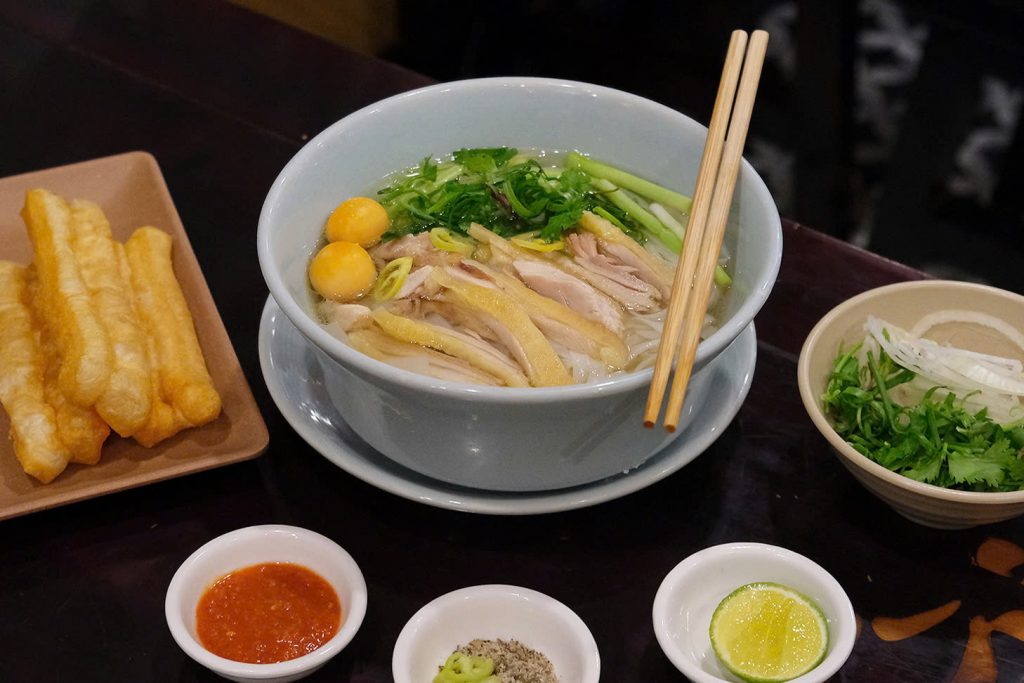
The history of chicken phở offered another fascinating chapter. Through literary accounts and traditional Hanoi practices, including the use of capons, participants gained a deeper understanding of a familiar dish whose history is less widely known.
For tourism professionals, such details provide valuable material for transforming an ordinary meal into a memorable cultural experience.
Behind the scenes of a Phở kitchen
One of the program’s highlights was the opportunity for tour guides to go beyond historical presentations and observe how phở is prepared at the Tài Lộc Phở System’s central kitchen.
A group of participants visited the kitchen, while the experience was livestreamed for those remaining at the restaurant. They learned about ingredient selection, bone preparation, the roasting of ginger and onions, and the techniques involved in simmering broth for hours to develop phở‘s characteristic flavour.
What may be routine work for a chef became a fascinating experience for tourism professionals. After all, telling the story of a dish requires an understanding of the skill, patience and craftsmanship behind it.
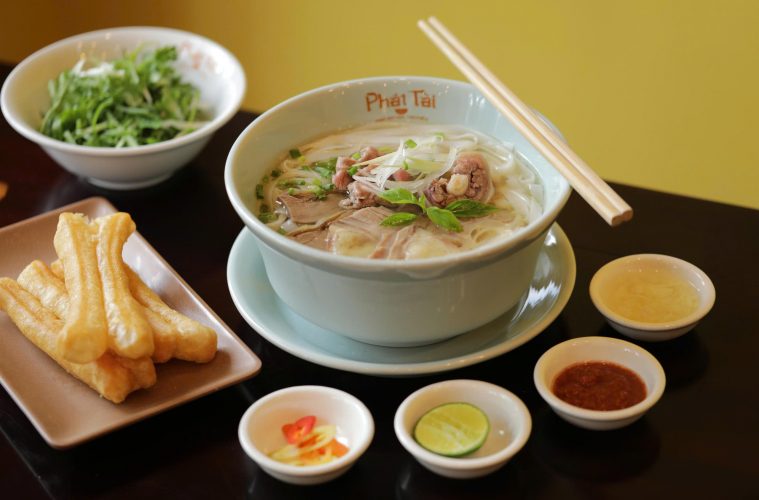
At the end of each workshop, participants enjoyed beef phở from Phát Tài and chicken phở from Phát Lộc, continuing their discussions on how best to introduce Vietnamese cuisine to international visitors.
Helping the world discover the stories behind phở
Tour guide Nguyen Hau shared that the workshop had given him a more complete story of phở to share in his professional work. Hong Ai, a guide specialising in culinary tours, also found the historical insights and regional differences between Northern and Southern phở particularly useful when introducing the dish to visitors.
Meanwhile, tour guide Pham Hieu told that the program had helped him realise how even Vietnamese people who have grown up eating phở may know surprisingly little about its history spanning more than a century.
A tour guide may introduce hundreds of international visitors to Vietnamese cuisine every year. With a deeper understanding of the food they present, each culinary tour can become more than a journey from one restaurant to another. It can become an exploration of Vietnamese culture, history and everyday life.
Building on the two gatherings attended by around 120 tour guides, the Tài Lộc Phở System hopes to create further opportunities for exchange between culinary professionals and the tourism community.
Promoting Vietnamese culinary heritage to the world does not always require grand initiatives. Sometimes, all it takes is a tour guide who can tell an engaging and historically grounded story about phở.
And through that story, a humble bowl of Vietnamese noodle soup may travel even further – not only across borders, but also into the memories of those who experience it.
Text & photo: Vu Huong