 admin
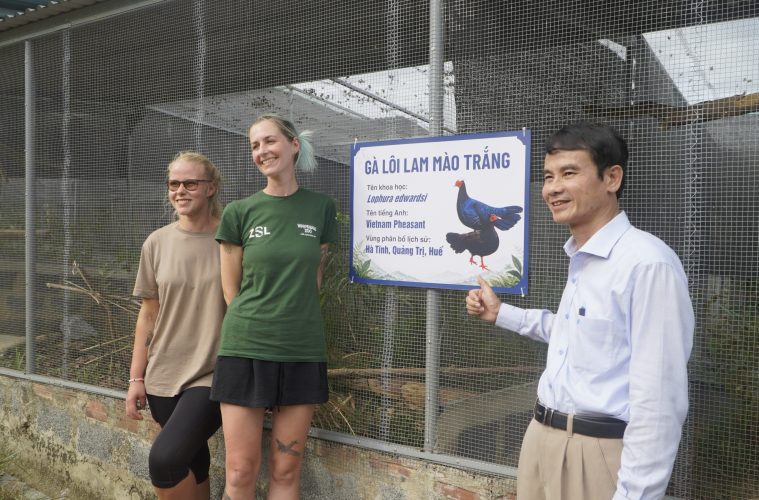
admin10 Edwards’s pheasants (Lophura edwardsi), consisting of 5 males and 5 females, have been brought to the Rare Pheasant Breeding Center in Bản Bang, Kim Ngân Commune, Quảng Trị Province on 4 August, 2026.
This marks an important milestone in a long-term effort to restore an endemic bird species unique to Vietnam, listed by the International Union for Conservation of Nature (IUCN) as Critically Endangered / Possibly Extinct in the Wild.
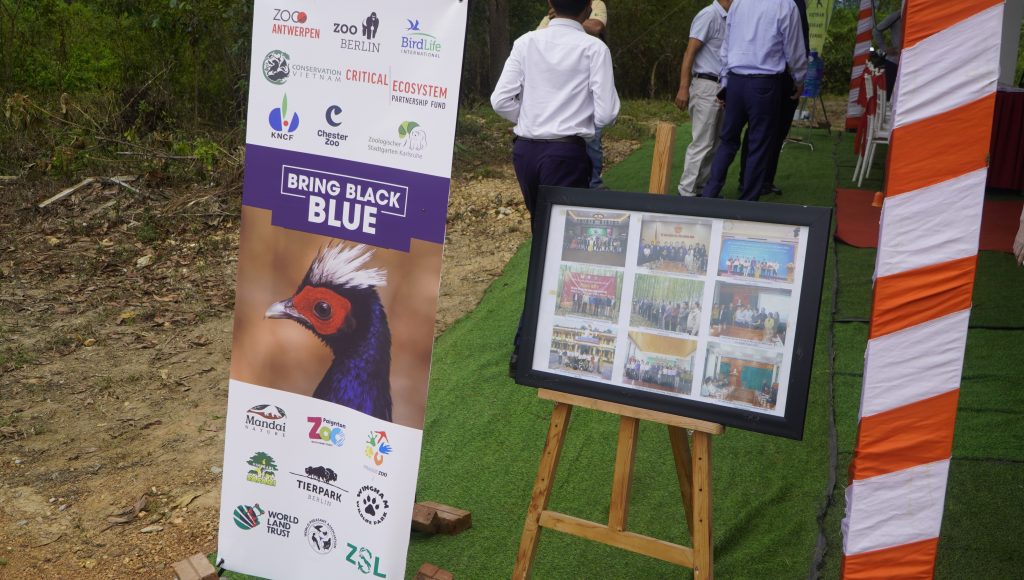
The flock originates from a conservation breeding population managed in Europe and was transferred to Vietnam through cooperation between Berlin Zoo and Tierpark Berlin, and Vinpearl Safari Phu Quoc – two partners in the Edwards’s Pheasant Recovery Program. The transfer was prepared based on health, genetic diversity, and animal welfare parameters to establish a strong foundation for the captive population in Central Vietnam.
The birds will be cared for, monitored, and acclimated to the local climate; form breeding pairs; and produce offspring born in Vietnam and raised naturally by their parents. Only when veterinary, genetic, behavioral, habitat, and security conditions are fully met will the next steps toward release be implemented.
“Today, we are not only welcoming Edwards’s pheasants back to Central Vietnam. We are giving a species unique to Vietnam a second chance to return and thrive in its native forests. This is a point of pride, as well as a shared responsibility for all of us.” – said Ms. Pham Tuan Anh, Director of the Viet Nature Conservation Center.
From conservation breeding back to nature
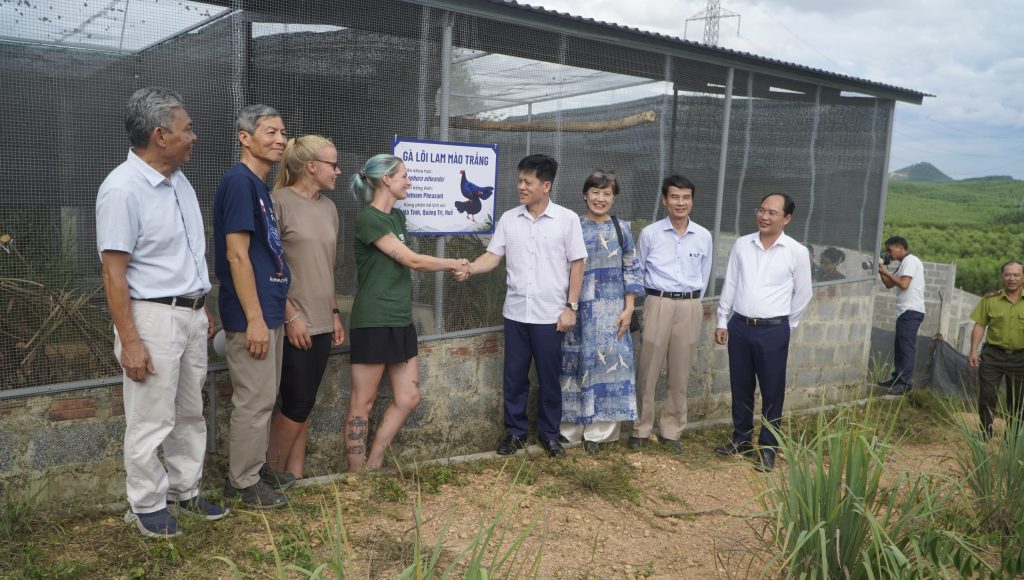
The Edwards’s pheasant once inhabited humid lowland forests in Central Vietnam, distributed across a narrow range in Ha Tinh Province, Quang Tri Province, and Hue City. Habitat loss and degradation, illegal poaching, and other prolonged impacts led to the species’ gradual disappearance. Fortunately, several individuals taken to Europe in the late 1920s formed an insurance population, preserving precious genetic material. Over more than a century of captive breeding, international zoos and experts maintained a genetically valuable population, creating a rare opportunity to restore the species in its homeland.
“The special significance of this event is that for the first time in over a century, Edwards’s pheasants have left zoos and private collections to return to the species’ historical range, on their journey back to nature.” – said Mr. Dang Gia Tung, Vice President of the Zoo Association of Vietnam.
At the Rare Pheasant Breeding Center, the rewilding process will be carried out cautiously. Suitable generations will be trained in foraging, predator recognition and avoidance, breeding, and chick-rearing, while adapting to the intense heat, wind, and heavy rain of Central Vietnam. In parallel, effort will go into habitat protection and restoration, snare reduction, biodiversity monitoring, and the preparation of post-release monitoring plans.
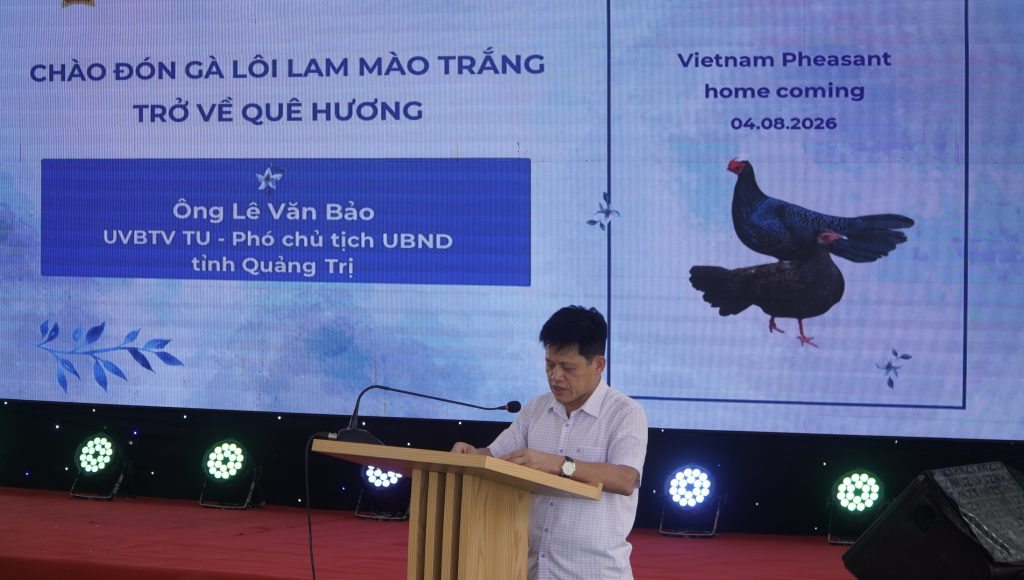
The program plans to conduct trial releases in late 2028, provided technical, veterinary, animal welfare, and habitat security requirements are satisfied. Based on the results of each stage, the program aims to restore a sustainably reproducing wild population by around 2035. These milestones serve as long-term targets and will be adjusted according to scientific evidence and monitoring data.
A long-term and joint effort
This journey is built upon decades of collaboration among Vietnamese agencies, conservation organizations, zoos, scientists, and local communities. The Viet Nature Conservation Center and Viet Nature Conservation Co., Ltd. gratefully acknowledge Berlin Zoo and Tierpark Berlin; Vinpearl Safari Phu Quoc; the European Association of Zoos and Aquaria (EAZA) Ex-situ Programme (EEP) for Edwards’s Pheasant coordinated by Prague Zoo; World Pheasant Association; Zoological Society of London (ZSL); Mandai Nature; Conservation Vietnam; alongside state management authorities, forest protection forces, technical partners, and local communities who contributed expertise, resources, and perseverance to the Edwards’s Pheasant Recovery Program and the “Bring Back Blue” initiative.
In Quang Tri, the support and coordination of the Provincial People’s Committee, departments, sectors, Kim Ngan Commune authorities, forest management units, and buffer-zone communities remain essential. Species recovery can only succeed when native forests become a safe home for the Edwards’s pheasant and all wildlife.
Source: vietnamnature.org